
Stencil Survey App
Stencil is a mobile survey platform designed to support clinical research conducted in real-world hospital environments. It balances the needs of participants with the operational demands of collecting reliable data across diverse study conditions.
Client
Mass General Hospital Travel Clinic

Opportunity
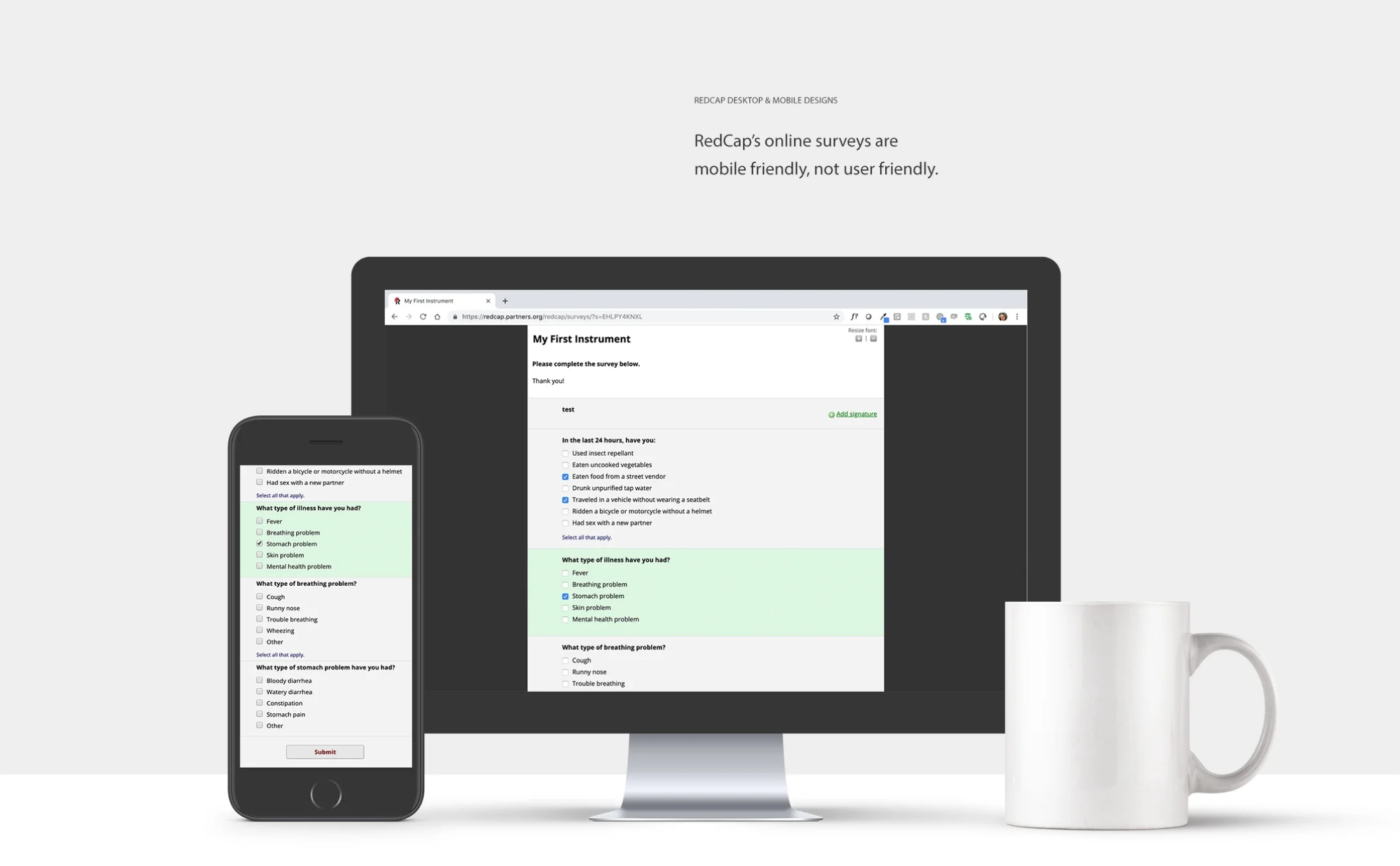
Clinical research teams were relying on existing mobile survey tools that were not designed for participant use in real-world settings. In the RedCap mobile experience, participants were often presented with long, vertically scrolling surveys in small fonts, with limited visual hierarchy and no clear indication of progress. Basic interactions created fatigue and frustration from fat-fingering on small radio buttons or checkboxes.
At the same time, researchers had limited ability to customize the survey experience. Beyond a brief introductory message, there was little opportunity to reflect a study’s identity or intent, making surveys feel impersonal and disconnected from the research itself.
The opportunity was not to replace existing survey infrastructure, but to create a mobile-first experience that improved participant usability while complementing established survey-building workflows. In partnership with research teams managing RedCap surveys, the work focused on designing a participant-facing experience that respected researchers’ existing processes while addressing the gaps that most directly affected completion, clarity and trust.
-
Interruptions were the norm, not the exception
Participants hesitated when time or progress was unclear
Researchers valued flexibility but not at the cost of participant confidence
Goals
Reduce cognitive load during survey completion
Make expectations and progress explicit
Support multiple study configurations without increasing complexity
-
We established the following principles as our north star to frame design decisions:
Protecting the user’s privacy
With health research studies covering numerous health-related topics, protecting user’s privacy is of utmost importance. Mobile surveys design factors in the sensitivity in outing a user by displaying study topics on smartphone interfaces; I communicated to partnering teams that study and survey names should not be mentioned on any mobile notifications for Stencil.
Reducing survey fatigue
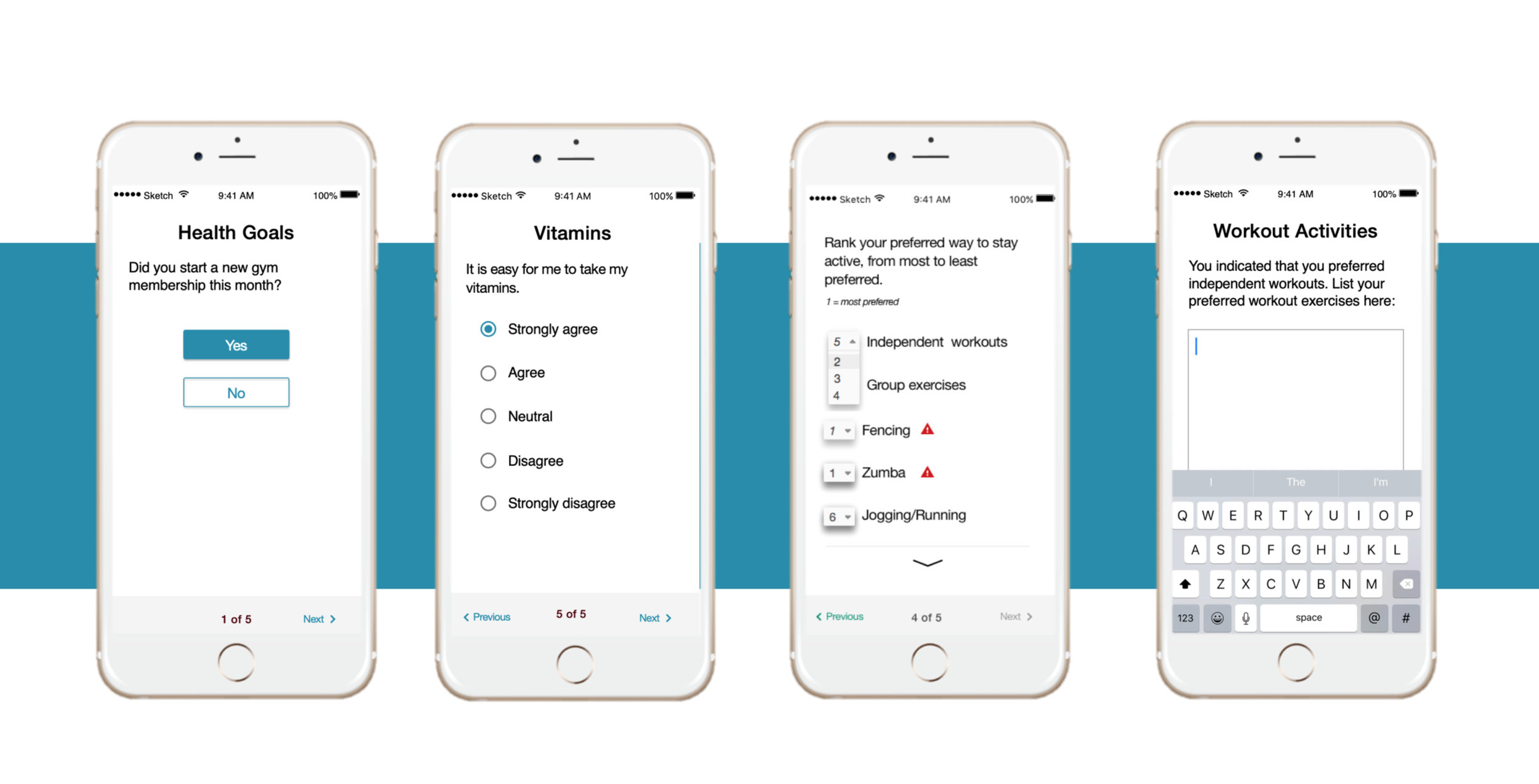
Although mobile surveys are easier to access, users might encounter barriers in completing a survey through study designs that do not consider the mobile use experience. I advocated for shorter studies with less texts, larger font sizes, button sizes that fit standard UI guidelines and an easy-to-follow flow of question topics. Branding recognition via customizable interface designs would also allow for users to recognize the app with little hesitation and guesswork.
Solution
The final solution is a mobile survey experience designed for clarity, momentum, and resilience. It minimizes decision-making, clearly communicates progress, and supports interruption without loss of context—allowing surveys to fit naturally into real life rather than compete with it.
Features
The following features were considered in the design of the app:
Research staff maintains control over data and data exports via RedCap
Notifications/reminders with language that does not compromise user privacy
Follow-up question topics are presented as close to the lead question as possible
No complex UI or interactions - easy to deploy and support
Design for both iOS and Android
Flow
Branding & UI explorations
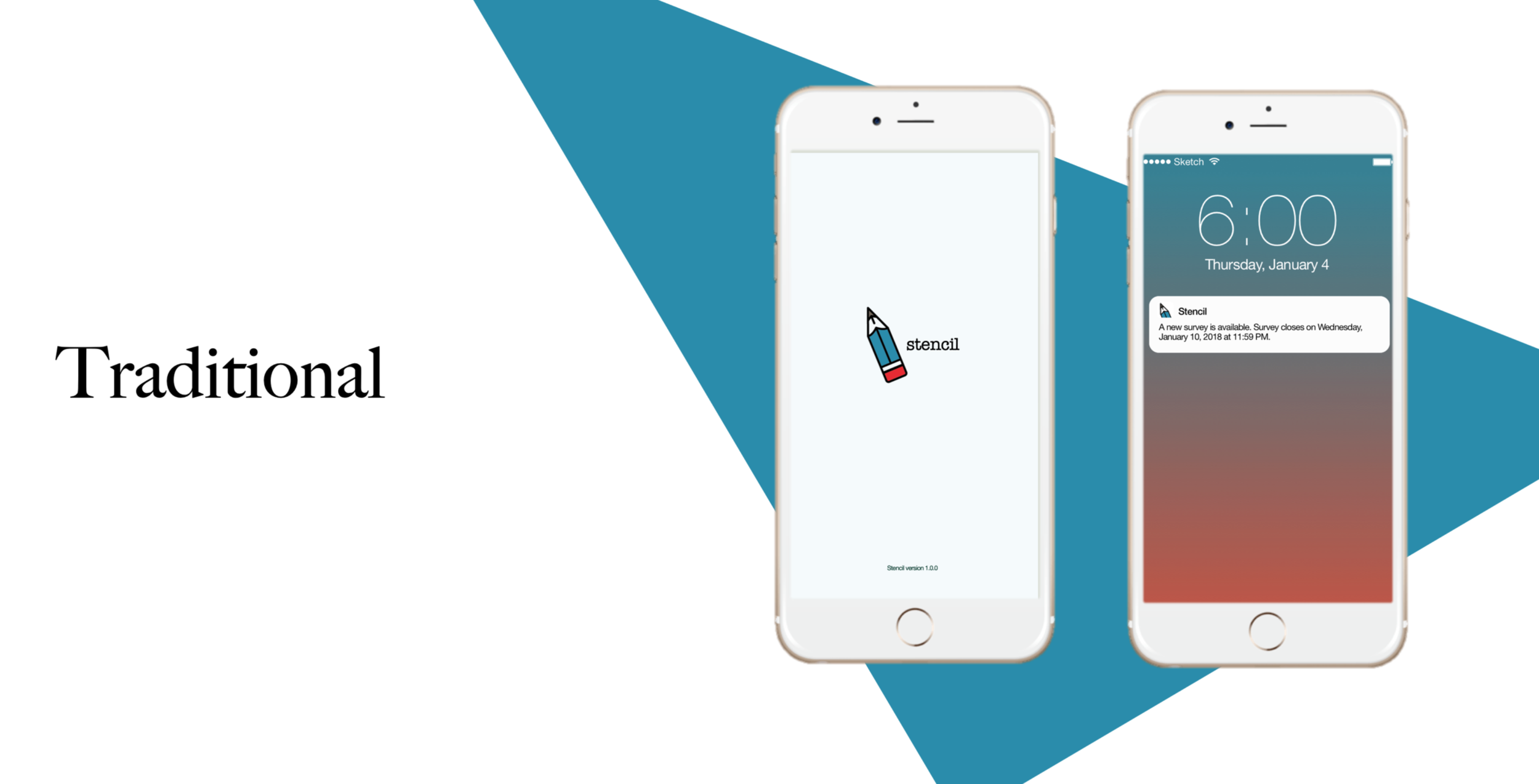
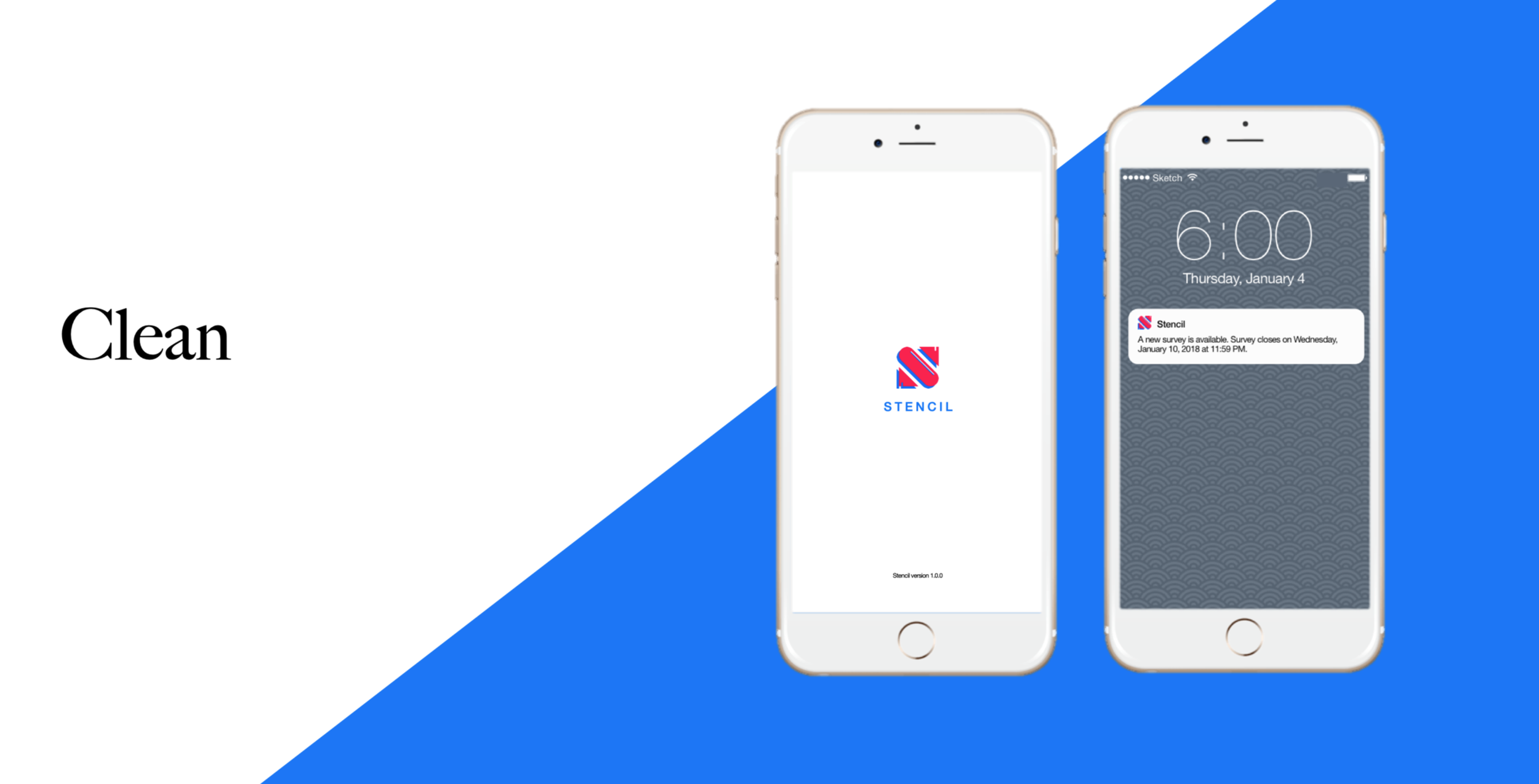
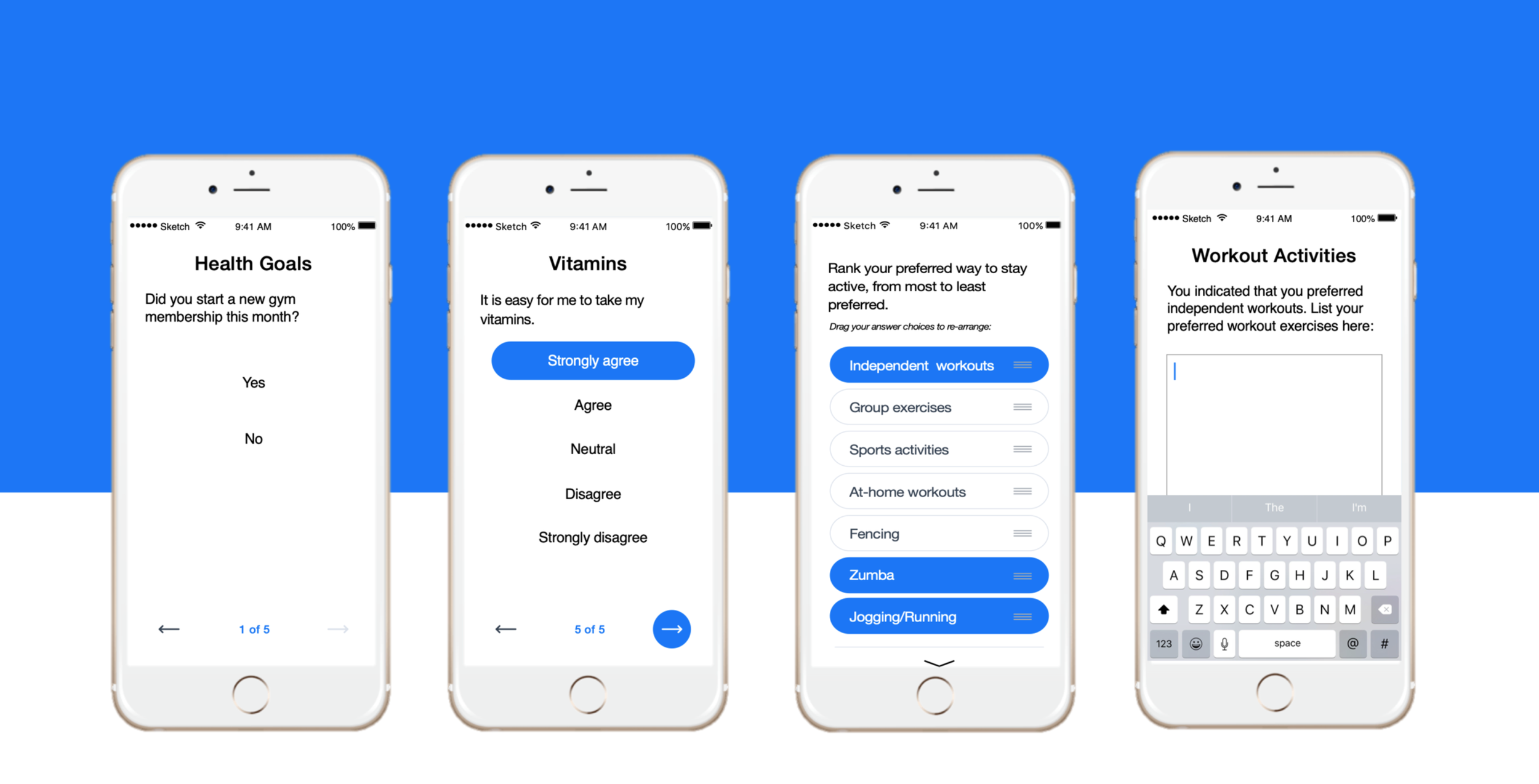

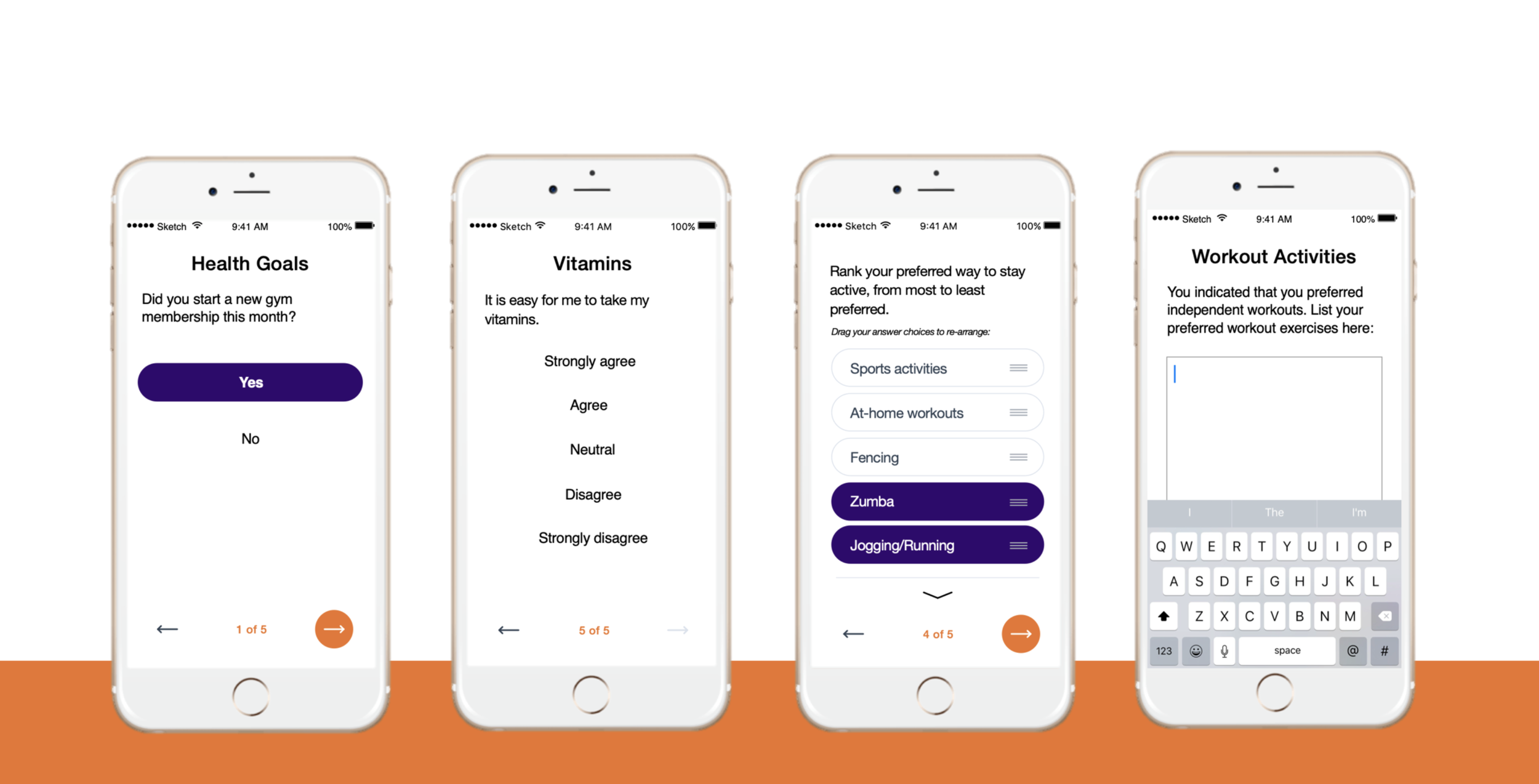
Branding colors and logo of the hospital were applied to the recommended “Clean” option from above.
Outcomes
The Stencil mobile platform is under contract for deployment for summer 2019. The first client to use the platform is The Mass General Hospital Travel Clinic for the Global TravEpiNet mobile survey for travelers who needed to monitor their symptoms for gastrointestinal disorders daily while overseas.
CREDITS
Office: Partners HealthCare Pivot Labs
(previously Partners Connected Health)
TEAM
Design Lead: Tasmia Noor
Tech Lead: ERIS RedCap team, Persistent Systems
Researcher: Jaclyn Hirschey